
The Practice of Living and Dying
The School of Lost Borders specializes in offering rites of passage ceremonies for modern folk. At the heart of a rite of passage, a term first coined by the Dutch-German-French anthropologist Arnold van Gennep, are the three phases he described: severance, threshold, incorporation. Or put another way: dying, in between, rebirth. You might say that a rite of passage is a “dying practice”: an opportunity to learn how to do the little deaths in life in preparation for the Big Death that awaits us all.
The Practice of Living and Dying is a special curriculum within the School that offers programs accentuating this dying-in between-rebirth process. It was started in 2003 by two of our guides: Meredith Little and Scott Eberle. Meredith, as one of the School’s co-founders, has been practicing “symbolic death midwifery” for over 40 years. Scott, working as a hospice physician, has offered “physical death midwifery” for over 30 years. Together they have created a program series that explores how a participant can move through their own “dying” process. Well after its inception, this curriculum was further expanded by other School guides drawing upon their own living and dying experiences.
The aim of a Practice of Living and Dying program is both educational and therapeutic. Educationally, this work draws upon the School’s years of symbolic death work in the desert, intertwining wisdom coming out of the modern hospice movement, the personal experiences of the guides, and the wisdom of the land. Therapeutically, time spent alone in nature exploring this living-and-dying material invites each participant to experience the wisdom of their own nature, especially their personal truths about living and dying.
These programs invite the asking of an inseparable pair of questions:
How do we live, so we may fully become our dying?
&
How do we accept our dying that we may fully embrace our living?
Upcoming practice of living & dying programs

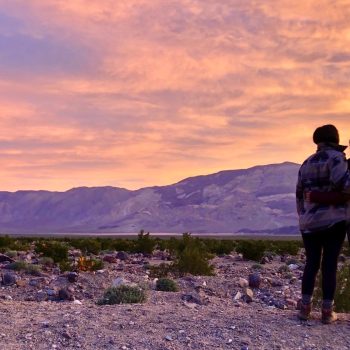
The Initiatory Nature of Loss
Sep 13 - Sep 20, 2026 Payahuunadü (Big Pine) and Eureka Valley, California Petra Lentz-Snow, Gretchen (Grae) Gerlach
The land around us (and within us) teaches with each passing season, and with each flood, drought, fire and storm, that out of change, crisis and a dying to what was, there appears a new story of ...
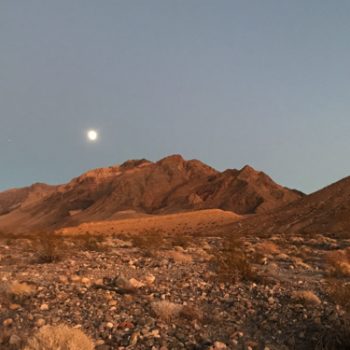
The Great Ballcourt Initiation – Fall Fast
Sep 28 - Oct 9, 2026 Eureka Valley and Big Pine, Ca Angelo Joseph Lazenka, Betsy Perluss
Death is the ultimate agent of transformation—be it a physical death or “the little deaths” encountered throughout life. Indigenous cultures developed rituals to aid and guide people through ...
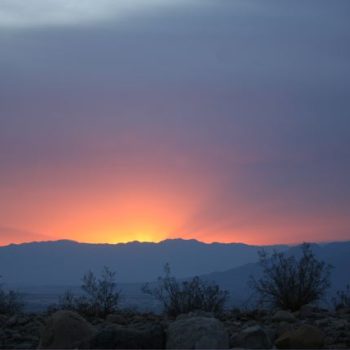
A Light in the Dark – Forgiveness and Apology in a Wounded World
Nov 7 - Nov 15, 2026 Hanaupah Canyon, Death Valley, California Bettina Linden, Scott Eberle
Forgiveness and Apology in a Wounded World ‘Your task is not to seek for love, but merely to seek and find all the barriers within yourself that you have built against it.’ - ...
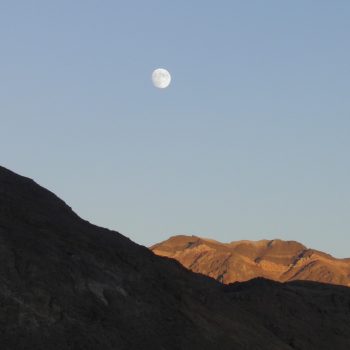
The Great Ballcourt Initiation – Spring Fast
Mar 9 - Mar 20, 2027 Lemoigne Canyon, Death Valley, California Scott Eberle, Cynthia Morrow
Death is the ultimate agent of transformation—be it a physical death or “the little deaths” encountered throughout life. Indigenous cultures developed rituals to aid and guide people ...
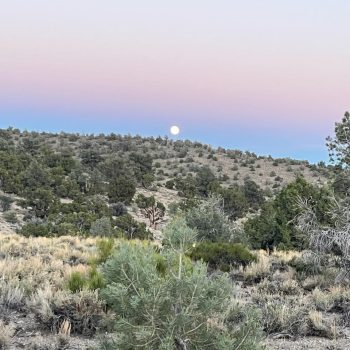
Dark Nature: The Initiatory Descent into the West
Aug 15 - Aug 21, 2027 Inyo National Forest, CA Betsy Perluss, Cynthia Morrow
Dark Nature is a seven-day initiatory immersion into the West—the season of descent, endings, and inward turning. Together we explore how life initiates us through loss, disruption, and change, and ...
The Great Ballcourt Initiation – Fall Fast
Oct 4 - Oct 15, 2027 Eureka Valley and Big Pine, Ca Angelo Joseph Lazenka, Betsy Perluss
Death is the ultimate agent of transformation—be it a physical death or “the little deaths” encountered throughout life. Indigenous cultures developed rituals to aid and guide people through ...